University of Maryland
Shi Jie
Samuel Tan
Fourth-year Computer Science PhD candidate
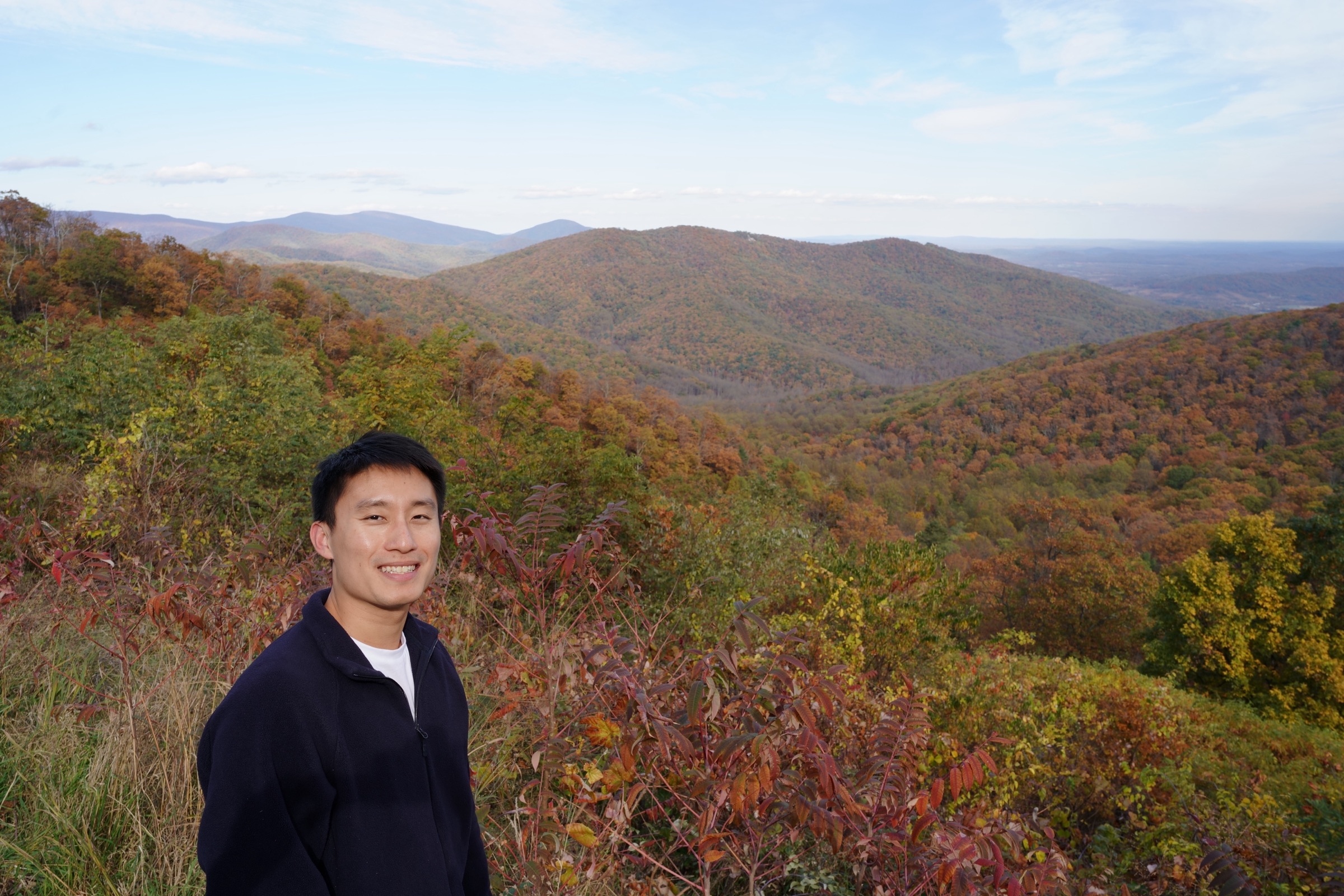
I go by Sam Tan. I work on quantum error correction and fault tolerance with Daniel Gottesman and Michael Gullans. I graduated magna cum laude from Haverford College in 2023 with high honors in Computer Science and Physics.
Updates
-
Shared a preprint on addressable transversal CCZ gates and magic state protocols.
-
Shared a preprint on estimating output probabilities of shallow quantum circuits.
-
Student researcher at Google Quantum AI in Playa Vista, California, with Noah Shutty and Michael Newman.
-
Shared preprints on non-Abelian quantum LDPC codes and magic state generation and the limits of automorphism gates.
-
Gave an invited talk at the NUS Centre for Quantum Technologies on generalized matching decoders.
-
Interned in quantum error correction theory at IBM Quantum in Yorktown Heights, New York, with Guanyu Zhu and Ted Yoder.
-
Presented posters on single-shot code switching and generalized matching decoders at QEC 2026 in Santa Barbara, California.
-
Gave an invited talk on single-shot universality in quantum LDPC codes at the IBM QITEC Summer Workshop.
-
Presented a poster on single-shot code switching at Monte Verità Quantum Codes in Ascona, Switzerland.
-
Gave an invited talk on single-shot code switching at the USYD–PsiQuantum Seminar.
-
Our paper on coherent quantum phase estimation via tapering appeared in PRX Quantum.
-
Spoke about single-shot code switching at the APS Global Physics Summit in Denver, Colorado.
-
Gave an invited talk on single-shot code switching to the Lukin Group at Harvard University.
-
Shared preprints on generalized matching decoders and surface codes with delayed atom-loss detection.
-
Our paper on surface-code resilience to error bursts appeared in Physical Review A.
-
Gave a short plenary talk on single-shot code switching and presented a poster on automorphism gadgets at QIP 2026 in Riga, Latvia.
-
Gave an invited talk on single-shot code switching to the Eisert Group at Freie Universität Berlin.
-
Our effective-distance paper appeared in Quantum, and we shared a preprint on single-shot code switching.
-
Gave a talk on adaptive syndrome extraction at TQC 2025 in Bengaluru, India.
-
Presented posters on adaptive syndrome extraction and automorphism gadgets at QEC 2025 in New Haven, Connecticut.
-
Shared a preprint on automorphism gadgets in homological product codes.
-
Our paper on adaptive syndrome extraction appeared in PRX Quantum.
-
Gave an invited talk on automorphism gadgets in homological product codes at the NUS Centre for Quantum Technologies.
-
Started my quantum error correction internship at QuEra Computing in Boston, Massachusetts, with Harry Zhou and Arpit Dua.
-
Presented a poster on effective distance in quantum LDPC codes at QIP 2025 in Raleigh, North Carolina.
-
Gave an invited talk on effective distance at Maryland’s Communication, Control and Signal Processing Seminar.
-
Presented a poster on tapered quantum phase estimation at TQC 2024 in Okinawa, Japan.
-
Shared a preprint on effective distance in higher-dimensional hypergraph product codes and weight-reduced quantum LDPC codes.
-
Shared a preprint on detecting outliers in identity-by-descent segments using pedigrees.
-
Shared a preprint on how the surface code withstands error bursts.
-
Shared a preprint on optimal coherent quantum phase estimation via tapering.
-
Presented a poster on surface-code resilience to error bursts at QEC 2023 in Sydney, Australia.
-
Started my PhD in Computer Science at the University of Maryland, College Park, advised by Daniel Gottesman and Michael Gullans.
Research
I use tools from quantum information theory, homological algebra, and graph theory to build quantum error-correcting codes and fault-tolerant protocols. I also work on quantum algorithms and quantum metrology. My goal is to help build quantum computers that can withstand decoherence and tackle problems beyond the reach of classical computers.
Selected papers
-
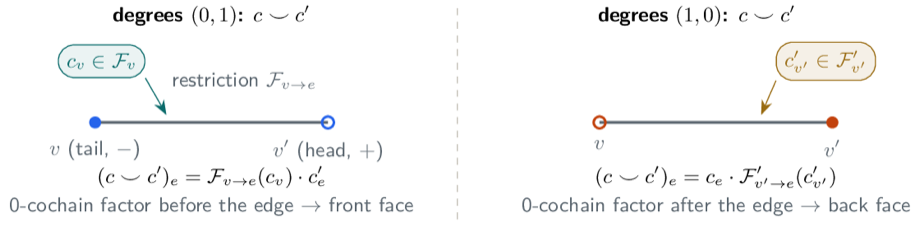
Addressable transversal CCZ gates on almost good quantum LDPC codes and nearly optimal magic state protocols
Under a local expansion assumption, our codes support individually selectable transversal CCZ gates and yield low-overhead magic-state protocols.
-
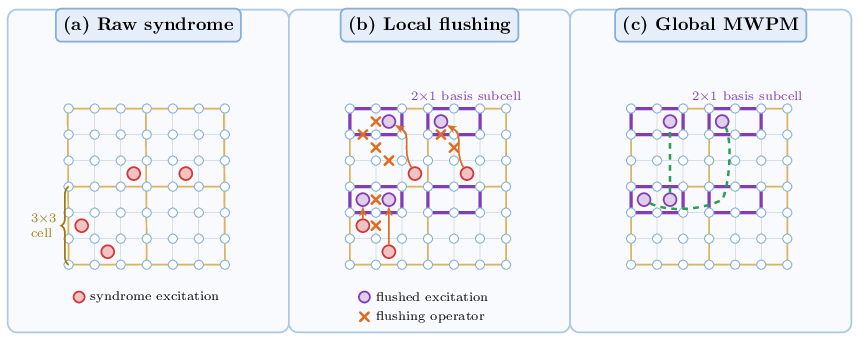
Generalized matching decoders for 2D topological translationally-invariant codes
We extend graph matching beyond the toric code and show in simulations that it can compete with established decoders on bivariate bicycle codes.
Contributed poster at QEC (2026).
-
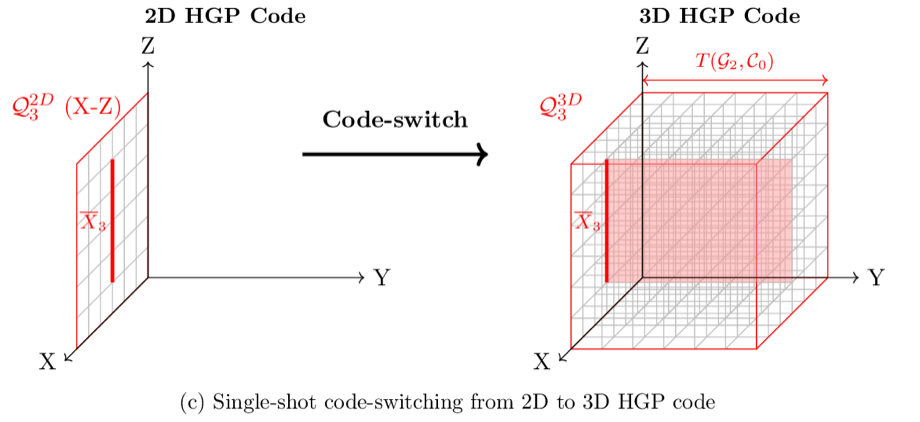
Single-Shot Universality in Quantum LDPC Codes via Code-Switching
Switching between high-rate quantum codes enables a universal set of fault-tolerant logical operations with constant-depth circuits.
Contributed short plenary talk at QIP (2026) and poster at QEC (2026).
-
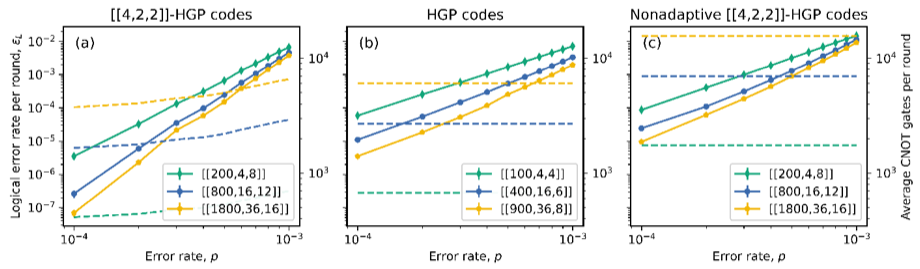
Adaptive Syndrome Extraction
Using early error signals to decide which checks to measure reduced logical error rates and the number of CNOT gates in simulations.
Contributed talk at TQC (2025) and poster at QEC (2025).
Research experience
-
Fall 2026
-
Summer 2026
-
May through fall 2025
QuEra Computing Inc.
Quantum error correction research intern
Mentored by Hengyun (Harry) Zhou and Arpit Dua
-
Summer 2023
Los Alamos National Laboratory (LANL) Quantum Computing Summer School (QCSS)
Research fellow
Mentored by Yiğit Subaşı and Sam Slezak
-
Summer 2022
Caltech's Summer Undergraduate Research Fellowship program
Undergraduate research fellow
Mentored by John Preskill and Chris Pattison
-
Summer 2021
University of Maryland's Research Experience for Undergraduates (REU) Combinatorics, Algorithms, and AI for Real Problems (CAAR)
Undergraduate research assistant
Mentored by Matthew Coudron and Gorjan Alagic